
Lung Cancer Research Foundation Expands Scientific Advisory Board
PR Newswire
NEW YORK, Nov. 17, 2026
Ten new members strengthen the expert review and scientific guidance behind foundation’s research funding priorities
NEW YORK, Nov. 17, 2026 /PRNewswire/ — The Lung Cancer Research Foundation (LCRF) has welcomed ten new members to its Scientific Advisory Board (SAB), expanding the scientific expertise that guides the Foundation’s investments in lung cancer research.
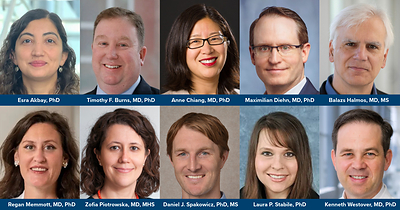
The Scientific Advisory Board plays a critical role in LCRF’s research funding process. Its members draw on their extensive knowledge of lung cancer biology, prevention, detection, and treatment to evaluate research proposals, identify promising scientific ideas, and recommend projects for funding. The SAB also provides guidance on emerging scientific developments and unmet need, helping to inform LCRF’s research priorities as it works toward its goal of doubling its annual investment in research by 2030.
“We rely on the scientific expertise of leading lung cancer specialists to ensure the research we fund addresses critical gaps and pursues the most promising opportunities to improve outcomes for people with lung cancer,” said Aubrey Rhodes, Executive Director of LCRF. “Our Scientific Advisory Board brings the breadth of expertise and perspective needed to recognize innovative ideas and investigators whose work has the potential to transform lung cancer care.”
Kathryn O’Donnell, PhD, Associate Professor of Molecular Biology at UT Southwestern Medical Center and chair of LCRF’s SAB, concurs, saying, “Lung cancer research is constantly evolving, with new challenges and questions, new technologies, and new approaches that create opportunities for discovery. Our responsibility is to evaluate these opportunities, recognize innovative science, and recommend research projects that can make meaningful advancements for patients. The perspectives and expertise of these new SAB members will be invaluable as we continue this work together.”
New Scientific Advisory Board members:
Esra Akbay, PhD
Associate Professor, Department of Pathology
UT Southwestern Medical Center
Esra Akbay earned her PhD from UT Southwestern Medical Center and received her postdoctoral training in translational lung cancer research from the Dana-Farber/Harvard Cancer Center. Her lab at UT Southwestern studies genetic and molecular events that lead to lung-tumor initiation and immune evasion. The Akbay lab team is studying how non-small cell lung cancer (NSCLC) and small cell lung cancer (SCLC) resist treatments and killing by immune cells, with the goal of identifying weaknesses that could be targeted to kill cancer cells more effectively. The lab also studies how different genetic changes in lung cancers influence the ways tumors defend themselves against the immune system, and how to disable those defenses so the body’s own immune system can be more effective and treatments can work better. The Akbay lab team has discovered a new form of PD-L1 that can be released into surrounding tissue or in the bloodstream – not just on the surface of the cell – meaning it can weaken the immune system from a distance, not just when in direct contact with immune cells. The researchers are also investigating how lung cancers turn surrounding immune cells into allies that help tumors survive rather than fight them, including interfering with the nutrients immune cells need to function. Understanding these different ways cancer evades the body’s natural defenses could help researchers develop new strategies to overcome immune suppression and improve lung cancer treatment.
Timothy F. Burns, MD, PhD
Professor of Medicine, Division of Medical Oncology
The Ohio State University Comprehensive Cancer Center – Arthur G. James Cancer Hospital
and Richard J. Solove Research Institute
Timothy Burns is a tenured Professor of Medicine, Division of Medical Oncology at the Ohio State University Comprehensive Cancer Center. He earned his MD, PhD at the University of Pennsylvania and completed his residency at Johns Hopkins University School of Medicine, where he also completed his Fellowship in Hematology and Oncology. Dr. Burns continues to see lung cancer patients in the clinic however, the majority of his time is spent in the laboratory, where his focus is on characterizing key signaling pathways that are critical for the growth of non-small cell lung cancer and to develop novel targeted therapeutic approaches in EGFR mutant and MET driven mutant non-small cell lung cancer and other oncogene driven lung cancers as well as the development of targeted therapy for brain metastases. He lost both of his parents to lung cancer as a teenager and has dedicated his career to improving outcomes for as many patients as possible. He is a past LCRF grant recipient, having been awarded the 2022 LCRF and MET Crusaders Research Grant on MET-Driven Lung Cancer.
Anne Chiang MD, PhD
Associate Professor of Medicine
Vice Chief, Clinical Affairs, Medical Oncology & Hematology
Yale School of Medicine
Associate Yale Cancer Center Director, Clinical Initiatives
Anne Chiang, MD, PhD, currently serves as an Associate Professor of Medicine in the Section of Medical Oncology, specializing in thoracic oncology, with a background in translational research in metastasis, as well as extensive experience in clinical practice in both academic and community settings. Her clinical focus has been to build a small cell lung cancer program at Yale with a comprehensive portfolio of clinical trials testing novel therapeutics for these patients. Her research interests focus on development of clinical trials and translational studies to test novel agents and combinations with immune checkpoint inhibitors for both small cell and non-small cell lung tumors.
In addition, she is the Interim Chief of Medical Oncology and Hematology and Associate Yale Cancer Center Director for Clinical Initiatives. She has also served as Deputy Chief Medical Officer and Chief Integration Officer for Smilow Cancer Hospital (SCH), having helped to build the SCH Network and oversee operations, quality efforts and clinical research in 16 sites. She has a particular focus in quality measurement and improvement and has spearheaded quality initiatives locally and nationally for ASCO. She also serves as the SWOG Executive Officer for Lung, Immunotherapeutics and Breast Committees.
Maximilian Diehn, MD, PhD
Kaplan-Lebeson Professor of Cancer Biology
Division Chief, Radiation and Cancer Biology Division
Vice Chair of Research, Department of Radiation Oncology
Stanford University School of Medicine
Dr. Max Diehn received his undergraduate degree from Harvard College and his M.D./Ph.D. from Stanford University. He completed radiation oncology residency at Stanford and subsequently joined the faculty. He is the Kaplan-Lebeson Professor of Cancer Biology, Vice Chair of Research, and Division Chief of Radiation and Cancer Biology in the Department of Radiation Oncology. He also co-leads the Stanford Cancer Institute’s Radiation Biology Program and the Stanford Lung Cancer Center. Dr. Diehn is a physician-scientist who specializes in the treatment of lung cancer. His research program spans laboratory, translational, and clinical studies. The main focus of his research efforts is on the development and application of liquid biopsy technologies across diverse settings, including cancer screening, treatment response assessment, characterization of treatment resistance mechanisms, and detection of minimal residual disease. Dr. Diehn is a serial entrepreneur who has co-founded several startup companies that have translated diagnostic technologies developed in his lab into the clinic.
Dr. Diehn has served on numerous committees of national and international organizations including the National Cancer Institute (NCI), American Society of Clinical Oncology (ASCO), American Association for Cancer Research (AACR), European Society for Medical Oncology (ESMO), and International Association for the Study of Lung Cancer (IASLC). He is a Scientific Editor for Cancer Discovery and serves on the Thoracic Malignancies Steering Committee of the NCI. He previously served as a standing member of the NIH Molecular Cancer Diagnosis and Classification Study Section and is currently a member of Cancer Research UK’s Early Detection and Diagnosis Research Committee. Dr. Diehn has been recognized with many honors, including the NIH Director’s New Innovator Award, the V Foundation Scholar Award, the Sidney Kimmel Scholar Award, the Doris Duke Clinical Scientist Development Award, the John Yuhas Award (University of Pennsylvania), and the Alvin S. Slotnick Award (Dana-Farber Cancer Institute). He was elected to the American Society for Clinical Investigation (ASCI) and is a Fellow of the American Society of Clinical Oncology (FASCO). In 2021, he was elected to the National Academy of Medicine for his research contributions to the field of liquid biopsies.
Balazs Halmos, MD, MS
Professor, Department of Oncology (Medical Oncology)
Professor, Department of Medicine (Oncology & Hematology)
Associate Director, Clinical Science, Montefiore Einstein Comprehensive Cancer Center
Albert Einstein College of Medicine
Balazs Halmos received his MD summa cum laude from Semmelweis Medical University, Budapest, Hungary and went on to complete his internal medicine residency at St. Luke’s-Roosevelt Hospital – Columbia University and Fellowship at Beth Israel Deaconess Medical Center – Harvard Medical School. While at Harvard, Dr. Halmos completed his MS in Clinical Sciences. In his current role, he is a thoracic medical oncologist and researcher focused on malignancies of the thoracic cavity, such as lung cancers, mesothelioma and thymoma.
Dr. Halmos oversees the Multidisciplinary Thoracic Oncology program as well as thoracic clinical trials program at the Montefiore Einstein Comprehensive Cancer Center where he also serves as Director for the Clinical Trials Office and Associate Director for Clinical Science of MECCC. His research interests are in clinical studies of experimental therapeutics, particularly studies of targeted and immunotherapeutic agents for thoracic cancers. His translational focus has revolved around lung cancer biomarker research, oncogenic tyrosine kinase targeting and treatment resistance.
He currently serves as a member of the NCI Thoracic Malignancies Steering Committee, he is committee chair for the IASLC Career Development Committee and is Senior Editor for Clinical Lung Cancer. His thoracic team at Montefiore/Einstein has been awarded the IASLC Team Award in 2025. Dr. Halmos received an early-career grant from one of LCRF’s legacy organizations, Uniting Against Lung Cancer, in 2012. He has been a frequent grant reviewer for LCRF, participant at many LCRF events and ran the NYC marathon in 2019 as a member of #TeamLCRF.
Regan Memmott, MD, PhD
Assistant Professor
Ohio State University, James Comprehensive Cancer Center
Regan Memmott earned her MD and PhD from the University of Cincinnati College of Medicine. She completed her residency in Internal Medicine at the University of Arizona, Phoenix, where she also served as Chief Resident. She went on to a Fellowship in Medical Oncology at the Ohio State University Comprehensive Cancer Center, where she now serves as an Assistant Professor.
Dr. Memmott leads a translational research program that identifies mechanisms by which lung cancer persists in response to targeted therapies and develops strategies to overcome these mechanisms. Specifically, her lab is investigating the mechanisms by which increased β-catenin transcriptional activity promote the development of drug-tolerant persister (DTP) cells in EGFR-mutant lung cancer, as well as in lung cancer driven by other oncogenes, such as ALK. She is also the principal investigator of a phase Ib clinical trial that is currently enrolling patients with metastatic EGFR-mutant lung cancer to evaluate if combining the β-catenin inhibitor tegavivint with the FDA-approved EGFR tyrosine kinase inhibitor osimertinib improves clinical outcomes.
Zofia (Zosia) Piotrowska, MD, MHS
Thoracic Medical Oncologist
Associate Professor of Medicine, Harvard Medical School
Clinical Co-Director, MGB Thoracic Medical Oncology Program
Mass General Brigham Cancer Institute
Zofia Piotrowska received her MD from Yale University School of Medicine and trained in internal medicine at Brigham and Women’s Hospital and in hematology/oncology at Dana Farber Cancer Institute and Massachusetts General Hospital.
Dr. Piotrowska’s research focuses on understanding mechanisms of acquired resistance and developing novel therapies for non-small cell lung cancer, particularly EGFR-mutated NSCLC. Throughout her career, she has been a proponent of patient-centered decision-making – and has been working to not only uncover treatment options following resistance, but to develop tools to test for resistance mechanisms that are less invasive and more effective for patients. She is the lead investigator of national and international lung cancer clinical trials and is a 2012 early-career grant recipient from Uniting Against Lung Cancer, one of the legacy organizations that became LCRF.
Daniel J. Spakowicz, PhD, MS
Assistant Professor of Internal Medicine & Biomedical Informatics
Co-Director, Center of Microbiome Science
Pelotonia Institute for Immuno-Oncology
The Ohio State University Comprehensive Cancer Center
James Cancer Hospital and Solove Research Institute
Daniel Spakowicz earned his PhD in Biophysics and an MS in Biomedical Informatics from Yale University, where he conducted postdoctoral research examining the microbiome and its interactions with the immune system. He is currently a cancer microbiome researcher and assistant professor in the Division of Medical Oncology at the Ohio State University, and a member of the Molecular Carcinogenesis and Chemoprevention Program at the Pelatonia Institute for Immuno-Oncology at the OSUCCC-James.
Dr. Spakowicz’s research centers on how the human microbiome influences cancer and its treatment. His laboratory investigates the microbiome’s role in cancer through computational biology, experimental methods, and clinical trials, focusing on linking microbial profiles to cancer treatment outcomes and mechanisms. In addition to work exploring the relationship between the gut microbiome and immune-oncology therapy responses, he has led research into adenosine as a mediator of tumor and tumor-microbiome interactions in non-small cell lung cancer, for which he received an Innovation Award from the American Lung Association.
Laura P. Stabile, PhD
Associate Professor of Pharmacology & Chemical Biology
University of Pittsburgh School of Medicine
UPMC Hillman Cancer Center
Laura Stabile earned her PhD in Biochemistry at West Virginia University, with her post-doctoral fellowship in Pharmacology at the University of Pittsburgh School of Medicine. She is a translational lung cancer scientist and Associate Professor at the University of Pittsburgh School of Medicine and UPMC Hillman Cancer Center and a prior grantee of LCRF and its legacy organization, Uniting Against Lung Cancer.
Dr. Stabile’s lab investigates oncogene-driven lung cancer with the overall goal of developing novel strategies for prevention and treatment. A major area of focus is lung cancer in never smokers, a growing population, particularly among women. These tumors have distinct molecular and biological features, shaped by hormonal signaling, environmental exposures, and genetic alterations. Her team’s research aims to understand these mechanisms to inform the development of effective, personalized therapies. Additional research focuses on the role of actionable oncogenes including EGFR, ALK, and MET in tumor development, therapeutic response and resistance, and disease progression. A particular emphasis is on brain metastasis, a common complication of advanced lung cancer. Her team investigates the molecular mechanisms underlying brain colonization, the influence of the brain microenvironment on metastatic growth, and non-invasive approaches to detecting molecular alterations in brain lesions. These studies aim to identify therapeutic strategies to better prevent and control brain metastases.
Kenneth Westover, MD, PhD
Professor, Radiation Oncology
Chief of Lung Radiation Oncology Service,
Director of Clinical Innovation and Information Systems
Co-director of the Simmons Comprehensive Cancer Center Thoracic Disease-Oriented Team
UT Southwestern Medical Center
Kenneth Westover received his PhD and MD from Stanford University School of Medicine and completed an internship in internal medicine at Brigham and Women’s Hospital in Boston. He followed this with his radiation oncology residency training at the Harvard Radiation Oncology Program.
Dr. Westover is the principal investigator of the Westover Lab at UT Southwestern, which focuses on discovering targeted therapies for major drivers of cancer using protein chemistry, enzymology, structural biology, informatics, and cell biology; drug targets include RAS and kinase proteins. The Westover Lab is helping scientists develop cancer treatments that target specific mutations in RAS, a family of proteins that can drive cancer growth.
The lab’s early discoveries helped pave the way for two FDA-approved drugs, sotorasib and adagrasib, that target a specific mutation called KRAS G12C. Today, the team is exploring other RAS mutations that have been difficult to target with drugs. This research is opening new possibilities for treatments designed to address different forms of RAS-driven cancer. By understanding how these mutations work, the lab is helping create new paths toward more precise cancer treatments.
In his role as Chief of Lung Radiation Oncology Service, Dr. Westover is focused on using adaptive radiation technologies to benefit lung cancer patients – including an approach that may improve treatment tolerability, reduce the dose to normal tissue through tumor shrinkage, and enable the immune system to cooperate with radiation therapy.
The full Scientific Advisory Board can be found at LCRF.org/SAB and learn more about LCRF’s research program at LCRF.org/Research.
About the Lung Cancer Research Foundation (LCRF)
The Lung Cancer Research Foundation® (LCRF) is the leading nonprofit organization focused on funding innovative, high-reward research with the potential to extend survival and improve quality of life for people with lung cancer. LCRF’s mission is to improve lung cancer outcomes by funding research for the prevention, diagnosis, treatment, and cure of lung cancer. To date, LCRF has funded 450 research grants, totaling more than $53 million, the highest amount provided by a nonprofit organization dedicated to funding lung cancer research. For more information about the LCRF grant program and funding opportunities, visit LCRF.org/research.
Contact:
Sheila Sullivan
Director, Communications
ssullivan@LCRF.org
 View original content to download multimedia:https://www.prnewswire.com/news-releases/lung-cancer-research-foundation-expands-scientific-advisory-board-302942127.html
SOURCE Lung Cancer Research Foundation


