
Cirrus (Cirrus Aircraft Ltd.) announced the Cirrus Perspective Core™ Flight Deck built on Garmin® AXIS™ avionics for its purpose-built and newly announced TRAC10. Engineered to transform flight training for the next generation of pilots, the Cirrus Perspective Core flight deck provides an intuitive, flexible, and seamlessly integrated flight deck for both instructors and student pilots.
This press release features multimedia. View the full release here: https://www.businesswire.com/news/home/20260709525664/en/
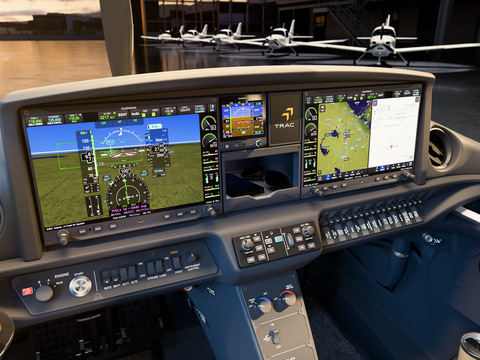
Cirrus announced the Cirrus Perspective Core™ Flight Deck, powered by Garmin® AXIS™ avionics, for its newly introduced TRAC10 training aircraft. Designed to enhance pilot training, the system features dual 11.6-inch touchscreen displays with advanced situational awareness tools, including 3D SafeTaxi™, Runway Occupancy Awareness, Enhanced Synthetic Vision, and comprehensive engine monitoring. The TRAC10 also introduces an industry-first three-seat configuration that allows two students to train simultaneously, with an optional third display at the rear observer station to improve instruction and training efficiency.
Equipped standard with dual high-resolution 11.6″ touch displays, Perspective Core displays sharpen situational awareness by allowing the pilot to configure a wide array of flight information into the most suitable format for different phases of flight. Fast data processing enables quick access to an array of information including 3D SafeTaxi™, Runway Occupancy Awareness, Enhanced Synthetic Vision, and advanced engine monitoring via the Engine Indication System (EIS).
The TRAC10’s innovative three-seat configuration is an industry first, enabling two students to train simultaneously and significantly increase flight training efficiency. An optional third display, positioned adjacent to the rear observer station, further enhances observational learning, allowing instructors and students to maximize every training session while increasing overall training productivity.
“We intentionally selected the Perspective Core flight deck for the TRAC10 to build student pilot skills for their professional careers,” said Zean Nielsen, Chief Executive Officer of Cirrus. “The new, intuitive flight deck sharpens pilot situational awareness with integrated systems that help pilots build the right skills.”
With visual elements and navigation capabilities designed to prepare students for modern commercial aircraft, the TRAC10 is designed to smooth the transition into a professional flying career from day one.
Flexible Flight Deck
The TRAC10 comes standard with a pair of bright 11.6” touchscreen displays, each configurable as a primary flight display (PFD) or multi-function display (MFD), with the Engine Indication System (EIS) always visible. Full-screen or split-screen display configurations offer an intuitive and flexible interface customizable to suit each pilot and learning style.
Increased Situational Awareness
Touchscreen displays and controls place essential functions within reach. The PFD shows key flight data alongside the horizontal situational indicator (HSI) with an embedded map or traffic view. Widgets offer three compact views of MFD functions, such as the map, flight plan, weather, and traffic. Enhanced Synthetic Vision Technology (SVT™) delivers 3D visuals of terrain, obstacles, runways, taxiway markings, and more, helping pilots interpret their environment clearly. Pathway guides display the route visually in the sky, including en route legs, flight track, and course intercepts. While 3D SafeTaxi provides a three-dimensional, exocentric view of the airport environment showing taxiways, runways, hangars, and nearby structures with clarity.
Innovative Safety Systems
Alongside the TRAC10’s embedded safety features –– the Cirrus Airframe Parachute System® (CAPS®), Electronic Stability Protection (ESP), and the Blue Level Button (LVL) ––Perspective Core adds a dedicated emergency button on the display bezel for quick access to procedures. Runway Occupancy Awareness uses ADS-B traffic to alert the crew of potential runway incursions from airborne aircraft, taxiing aircraft and ground vehicles. An optional SurfaceWatch™ runway monitoring system adds visual and aural cues to help prevent takeoffs or landing on a taxiway.
Reliable Engine Management
The turbocharged Rotax 916 iSc engine and Cirrus Perspective Core flight deck simplifies aircraft operation and reduces pilot workload. Advanced FADEC controls and single-lever power management eliminate many traditional engine management tasks, while the integrated EIS provides clear, real-time performance information at a glance.
The 160-horsepower Rotax engine delivers exceptional reliability and efficiency, burning as little as 5.9 gallons per hour at 65% cruise power to reduce operating costs and maximize aircraft availability. It supports multiple fuel options—including 100LL AvGas, unleaded 91/94, and select Mogas blends—and is backed by an industry-leading warranty and support network.
The result is a fuel-efficient, highly reliable training platform designed to maximize aircraft availability and let pilots focus on flying.
Fleet Connectivity
Cirrus IQ™ provides fleet intelligence to TRAC10 flight training operations, wirelessly transmitting aircraft data and integrating with third-party flight debriefing tools and fleet management dashboards. Automatic Database Updates keep aircraft current without manual monthly updates, while fleet administrators can digitally monitor fuel, fluids, and maintenance intervals –– simplifying fleet management.
The TRAC10 will be manufactured at Cirrus headquarters in Duluth, Minnesota and U.S. deliveries begin in 2027, with international deliveries starting in 2028. Cirrus has secured over 100 TRAC10 aircraft orders from 13 professional flight schools worldwide. The TRAC10 starts at $499,900.
Watch the TRAC10 launch video here and learn more at cirrusaircraft.com/trac10.
About Cirrus
Cirrus is the recognized global leader in personal aviation and the maker of the best-selling SR Series piston aircraft and the Vision Jet®, the world’s first single-engine Personal Jet™, and the recipient of the Robert J. Collier Trophy. Founded in 1984, the company has redefined aviation performance, comfort and safety with innovations like the Cirrus Airframe Parachute System (CAPS) – the first FAA-certified whole-airframe parachute safety system included as standard equipment on an aircraft. To date, worldwide flight time on Cirrus aircraft is more than 19 million hours, and 299 people have returned home safely to their families as a result of the inclusion of CAPS as a standard feature on all Cirrus aircraft. The company has seven locations in the United States, including Duluth, Minnesota; Grand Forks, North Dakota; Greater Dallas, Texas; Greater Phoenix, Arizona; and Greater Orlando, Florida; Knoxville, Tennessee and Benton Harbor, Michigan. Learn more at cirrusaircraft.com.
View source version on businesswire.com: https://www.businesswire.com/news/home/20260709525664/en/
Media gallery


